
It’s 3pm. Everyone’s at their desk. The meeting happened, the emails got answered, the timesheet says it was a full day. But if you’re honest, half the team has been running on fumes since lunch… and some of them never really had lunch.
I saw this up close for five seasons producing The Biggest Loser. Long days on set, a crew making a health show, and nowhere to grab a healthy snack. People turned up and worked hard, but by late afternoon you could see it. Tempers got shorter, decisions got slower and the lolly jar took a beating. Nobody was absent. Everybody was flat.
There’s a name for that: presenteeism. It’s the cost that never shows up on a report, and food is one of the easiest bits of it to fix. Not all of it! But a bit you can actually do something about this week.
Presenteeism: The Cost That Doesn’t Show Up on a Report
So what’s the presenteeism meaning in plain English? It’s being at work while you can’t work at your usual capacity. You’re there, but your focus, pace or judgement has slipped. Maybe you’re unwell, maybe you slept badly, maybe you’re stressed, or maybe you haven’t eaten since 6am.
Absenteeism and presenteeism get lumped together, but they’re very different. Absenteeism is easy to spot. Someone calls in sick, there’s a gap in the roster, you notice. Presenteeism at work hides inside hours that look completely normal on paper. A timesheet can’t tell the difference between a cracking day and one spent pushing through a headache.
That’s why the cost of presenteeism is so sneaky. It looks like an email that needs rewriting, a decision pushed to tomorrow, or a colleague quietly picking up the slack. None of it gets logged. All of it adds up.
Where food fits in
Let’s be clear… a better snack shelf won’t fix burnout, illness, a brutal workload or a team that’s short staffed. When people talk about presenteeism and productivity, food is one piece of the picture, not the whole thing.
But it’s a piece you control. You can’t make someone sleep better. You can make sure there’s something decent to eat when they need it, and time to eat it.
What Under-Fuelling Looks Like in a Typical Workday
Under-fuelling at work rarely means skipping every meal. It’s much more ordinary than that:
- Leaving home too early for breakfast.
- Eating lunch at the keyboard, or not at all.
- A meeting that runs straight through the lunch break.
- Heading out at 2:30 to find the café’s finished lunch service.
- The late shift arriving to a kitchen that’s been picked clean.
- The only thing within reach at 3pm is a packet of lollies.
When lunch falls through
Picture this. It’s a busy Tuesday. Your project coordinator meant to bring lunch, but it’s still sitting on the kitchen bench at home. Calls run back to back all morning. When she finally gets a break, the nearest place has packed up for the day.
You could say she should’ve planned better. (Trust me, I’ve written a whole guide on packing lunches!) But life gets away from all of us. The more useful question is: why did her workplace leave her zero room for a perfectly normal mistake?
There are plenty of other versions of that day. A warehouse worker with a 20-minute break and nowhere close to buy something filling. Someone with a dairy allergy who finds the one ‘healthy option’ is a yoghurt. Access takes more than a fruit bowl on the counter.
Look for the friction
After 11 years in this business, here’s what I know: most of the time, the easier option wins. If the healthy choice is a 15-minute walk away and the chips are right there, the chips win. That’s not a willpower problem, it’s a design problem.
So instead of judging the person, look at the obstacles in their way:
- Is there actually time to leave the desk?
- Is food and water available during the hours people really work?
- Are the options affordable, and do they suit different dietary needs?
- Does the culture make taking a break feel like slacking off?
That last one matters more than you’d think. A well-stocked machine doesn’t help much if everyone feels they need permission to use it.
Practical Ways To Support Energy at Work
Good news: none of this needs a big budget or a wellbeing committee. Remove as many obstacles as you can and people will look after themselves.
1. Protect the break
Breaks need to work in the real roster, not just exist in a policy document. If your team covers phones, sort out who covers while someone steps away. If meetings keep swallowing lunch, move them. The cheapest fix might simply be giving people time to eat the lunch they already brought.
2. Cover every shift, not just nine to five
A café that closes at 2pm is great for the office crowd and useless for the late shift. Water, somewhere clean to sit and food people can reach outside the lunch rush are the basics. Ask the people on each shift what’s missing before you decide what to stock.
3. Offer choice, skip the lecture
Nobody wants to be told off for what they eat. One person wants something filling, another needs nut-free, another just wants a small snack to tide them over. That’s why we curate our healthy office snacks with Jenn, our Accredited Practising Dietitian. Make the better option easy to find, then let adults choose.
4. Ask real questions
Skip the vague wellbeing survey. Ask things you can act on. What can people actually get when they take a break? What sells out, and what never gets touched? Is there anything for people who avoid dairy or nuts? Is there a fridge where lunch from home stays cold? Those answers make a far better shopping list than any poster about healthy habits.
5. Put it where people already walk
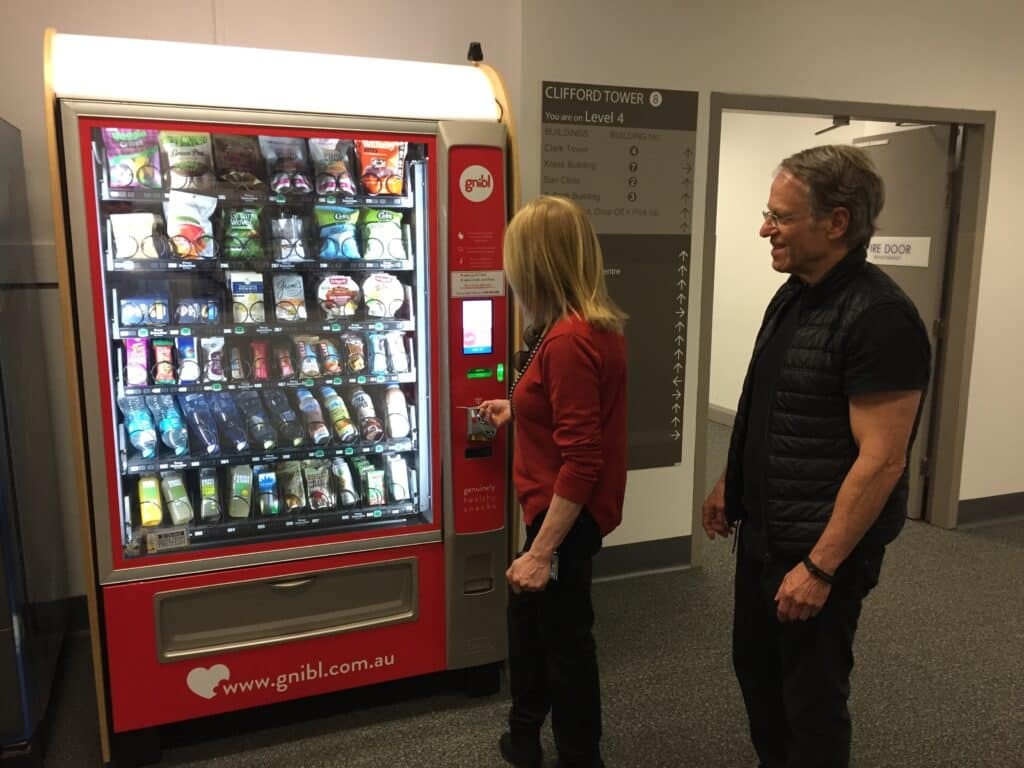
If you’re looking at a vending machine, placement matters as much as what’s in it. A machine tucked down a corridor nobody uses won’t fix a convenience problem. Our healthy office vending machines go where your team already is, so a decent option is within reach when the usual food run isn’t possible.
On bigger sites, where one machine is cleaned out by lunchtime, a workplace micro market goes further: fresh meals, snacks and drinks on open shelves with a self-checkout kiosk, open around the clock.
6. Check in without checking up
Give any change a few weeks, then ask. Are people using it? Does the range work for the late shift? Do staff feel okay taking a proper break? You don’t need to dress it up as a productivity win. If people can find something they want to eat when they need it, you’ve removed a real daily annoyance.
One line not to cross: improve the environment, don’t monitor anyone’s lunch. If someone’s struggling, ask what support they need and follow your usual processes. Their diet isn’t the first place to look. For the bigger picture, we’ve written more about good workplace nutrition.
Frequently asked questions
What is the meaning of presenteeism at work?
It means being on the job but not able to work at your usual capacity. It could be illness, stress, fatigue, hunger or something personal, and output alone won’t tell you which. Start with a supportive conversation and look at the conditions around the work.
What is the difference between absenteeism and presenteeism?
Absenteeism is being away from work. Presenteeism is being at work but not performing as usual. Both affect a team, but presenteeism is much harder to spot because the hours still look normal on paper.
Can better snacks eliminate the cost of presenteeism?
No. Better food access removes one practical barrier, but it won’t fix an excessive workload, illness or a culture where breaks are frowned upon. Think of it as one easy win inside a bigger conversation about time, conditions and support.
How can managers make food easier to access on late shifts?
Ask late-shift staff what they can actually reach during their break, then stock options for those hours somewhere convenient. On larger sites, micro markets are open 24/7, so a late finish or early start doesn’t mean going without a proper meal. Make sure there’s water and somewhere to sit, too.
TL;DR
- Presenteeism is the hidden cost. People are at work, but not at their best, and it never shows up on a timesheet.
- Under-fuelling is usually ordinary. Skipped breakfast, lunch at the desk, nothing nearby once the café shuts.
- Food is one piece, not a cure. It won’t fix burnout or a crazy workload, but it’s a piece you control.
- Make the easy option the healthy one. Protect the break, cover every shift and put good food where people already walk.
- Ask, don’t lecture. Find out what’s missing, offer choice and let adults decide.
A Workday With Fewer Barriers
When someone’s running on empty, another reminder to look after themselves rarely helps. Give them time to take a break. Make decent food available when they’re actually there, not just when the café down the road is open. Then ask what’s getting in the way, and listen.
There’s a brighter side to all this, too: the benefits of a well-nourished team go well beyond fewer flat afternoons. If your workplace could use better options, our machines are free to host, with no lock-in contract and a free 60-day trial. Have a chat with the Gnibl team and we’ll help you work out whether a machine makes sense for your space.